The Sharing Soul: Growing Up with the Gatsby
When you ask a local about Cape Town street food, they won’t mention artisanal sourdough; they will undeniably say the Gatsby. Growing up in Athlone, my earliest memories are tied to this "Friday food"—the default choice for our household when no one wanted to cook. It was the ultimate "bang for buck," a roll as long as an adult’s forearm that could fill a house with the scent of spices and warm bread.
The Ritual of "Clubbing Together"
The Gatsby isn't just a meal; it is a communal social contract. In my youth, it usually started with someone exclaiming, “Yoh, I’m hungry!” followed by the inevitable "clubbing together" of whatever money we had. Whether we were a crew of four or six, the ritual involved cutting that massive roll into sections; funny enough, we’d cut it into four even if there were only two of us. We washed it down with 2-litre bottles of Cabana or Frulati juice, though today you’ll see more Coke Zero or Jive in the mix.
Beyond the Postcard: Hands-On Authenticity
While the city has shifted toward "healthy" trends and food intolerances, the Gatsby remains a defiant feature of the Cape Flats. From the prized Masala Steak to calamari fillings with tartar sauce, every neighbourhood has its legendary establishment, be it Golden Dish, Cosy Corner, or Super Fisheries. Everyone has their preference, but the rule remains universal: use your hands and get into it—no knives or forks allowed.
A Native’s Truth
Looking back, I realise the Gatsby was often the "default" because it was the most affordable way to feed a group. Today, it represents a "bittersweet" piece of my identity—a reminder of a time when necessity created a culture of sharing that few modern establishments cannot replicate. It is one of those "corner pieces" of the city that hotel concierges might be too scared to mention, but it is where the real soul of the City lives.
Written by: Mark Smith - Athlone Local at Heart
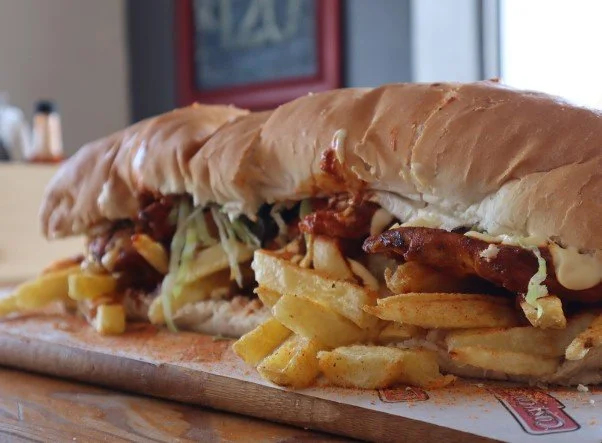
Gatsby from Busy Corner in Wynberg, Cape Town.
